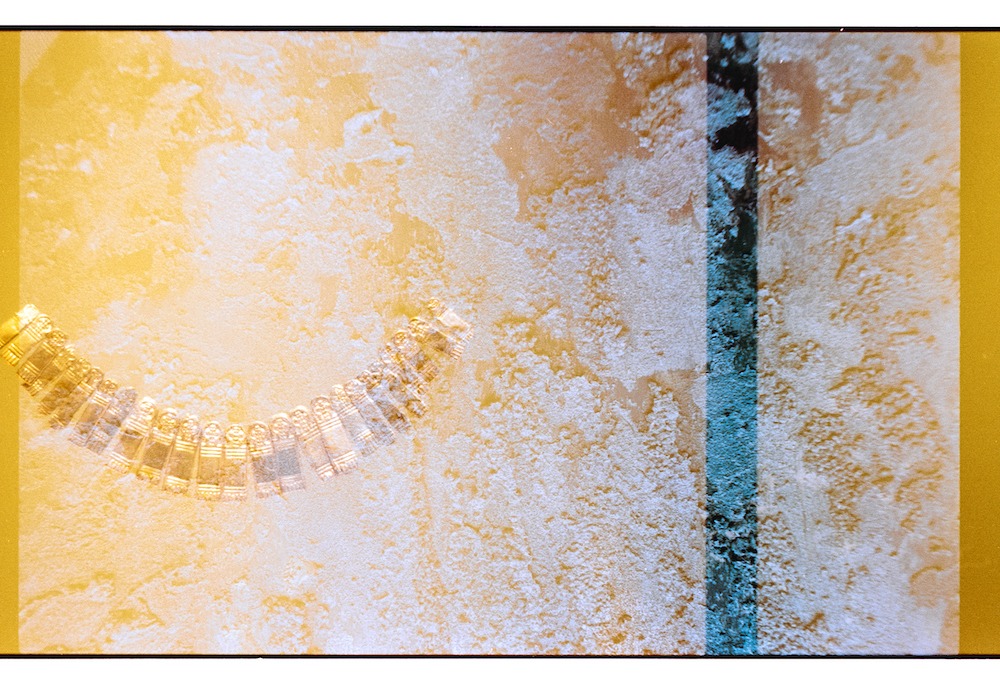
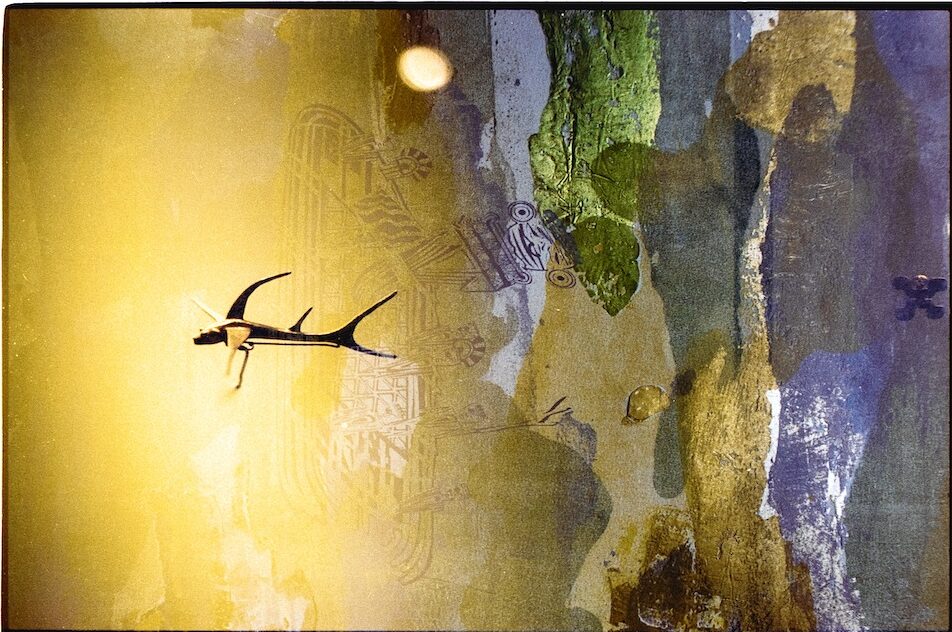
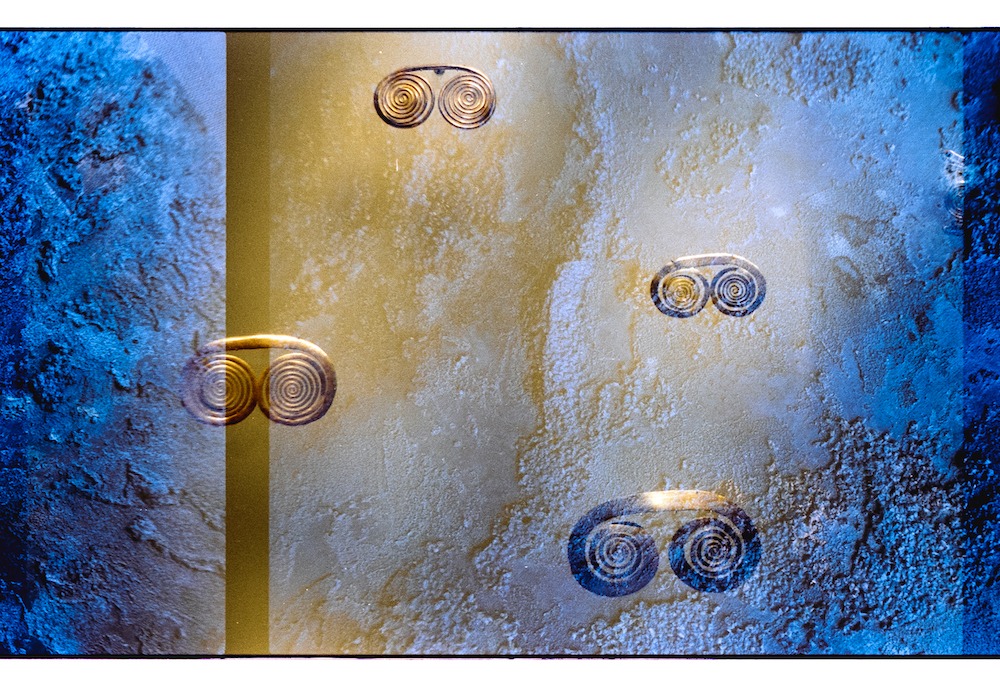
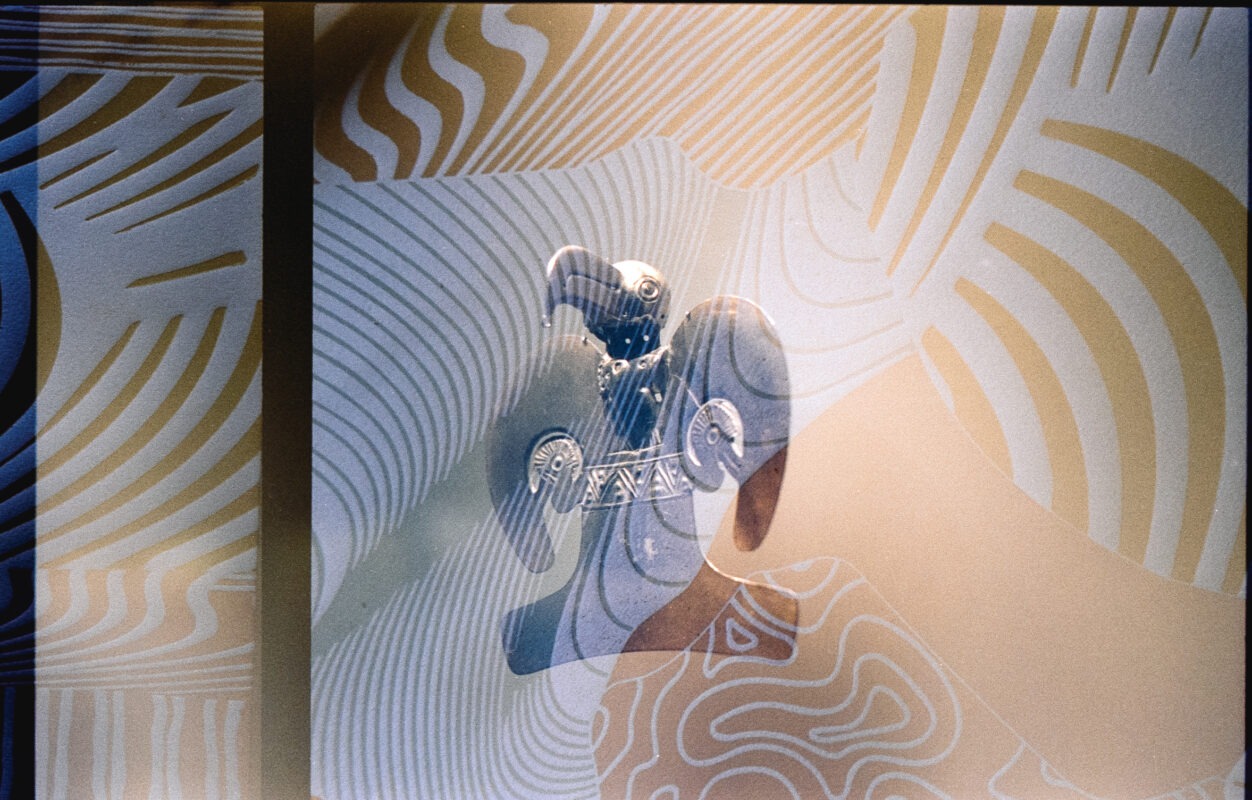
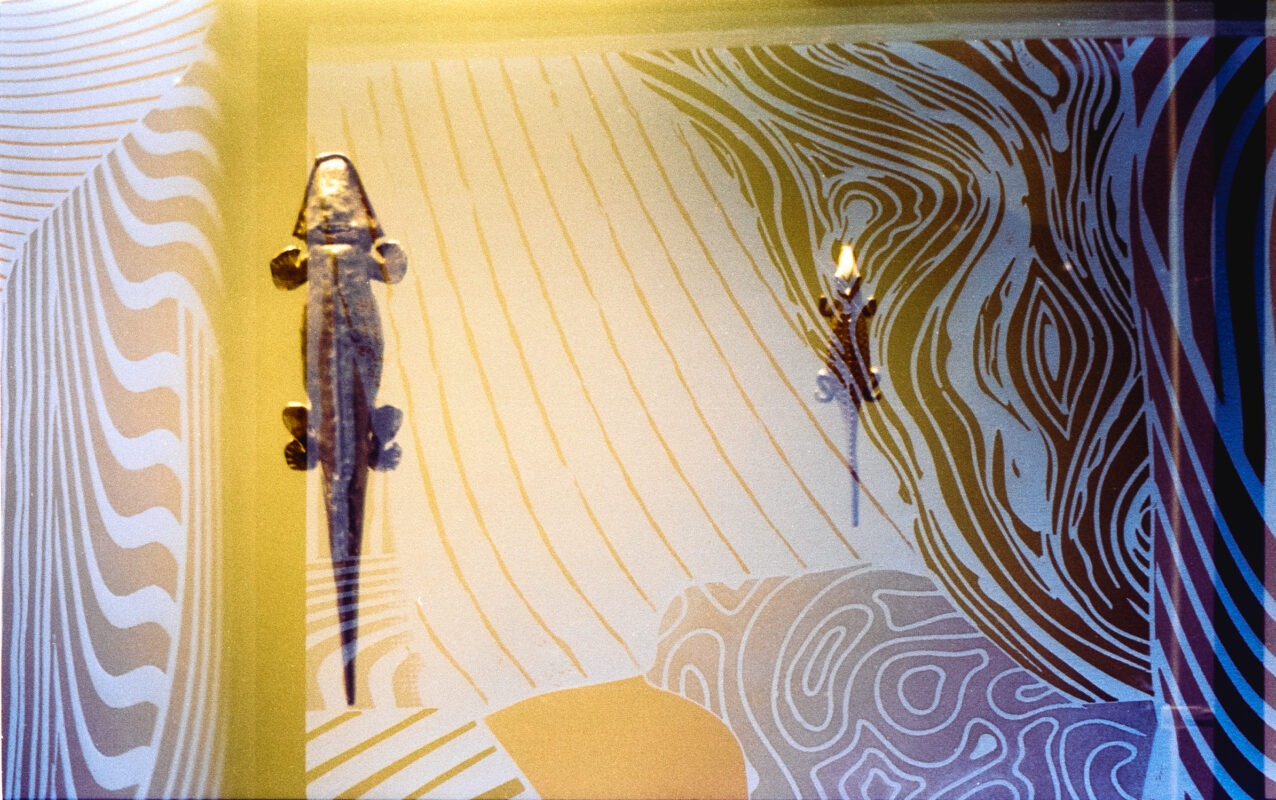
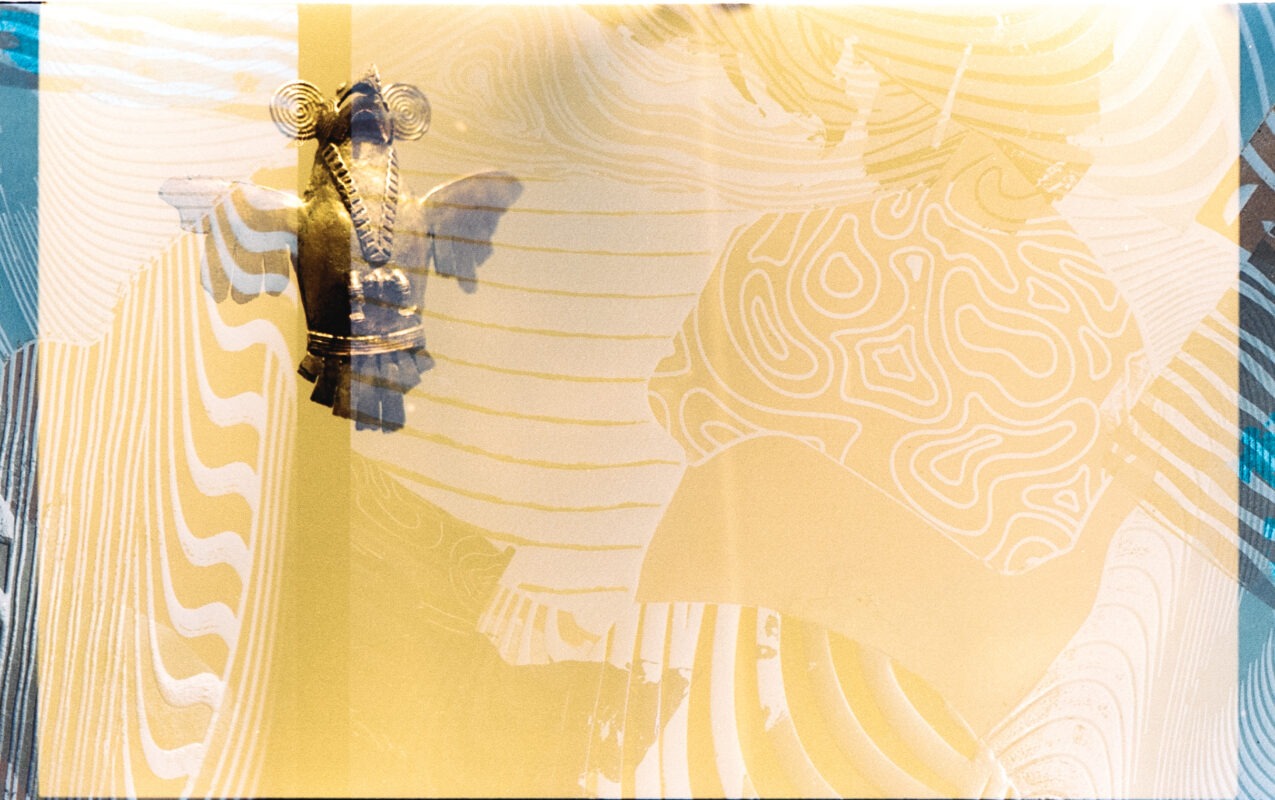
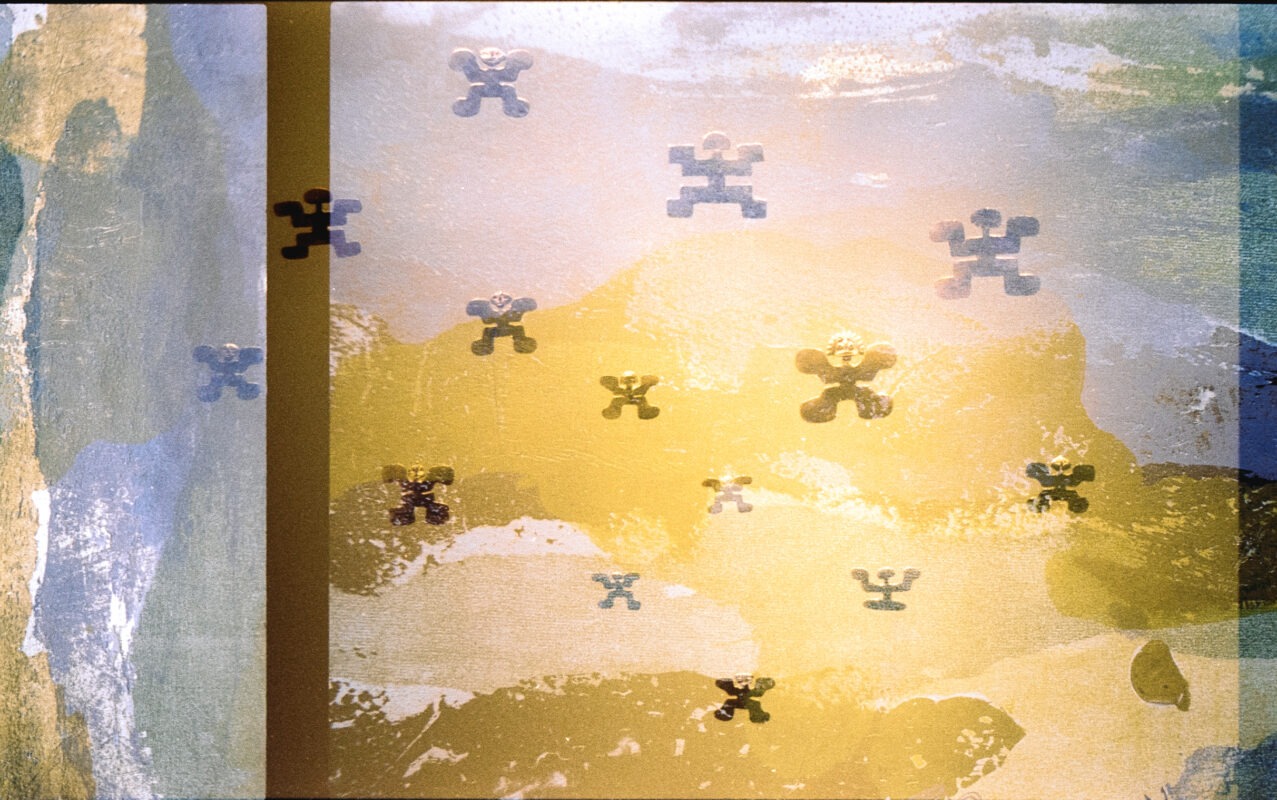
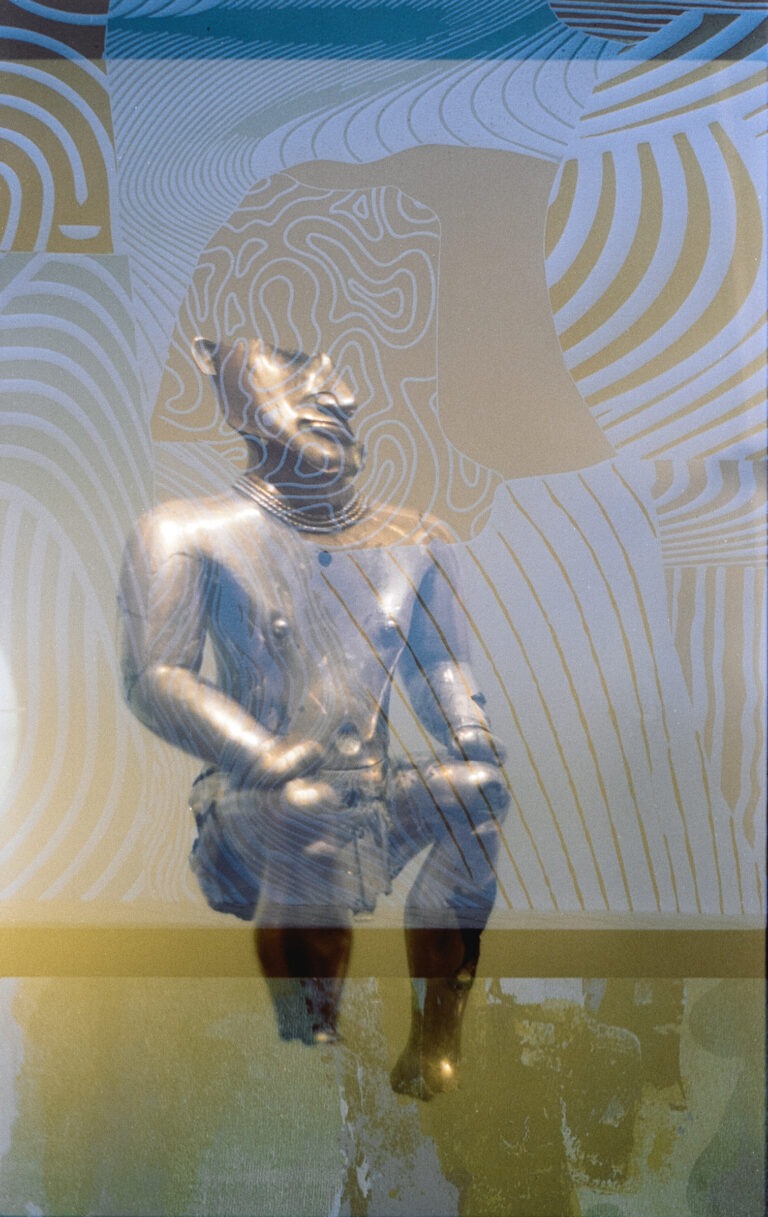
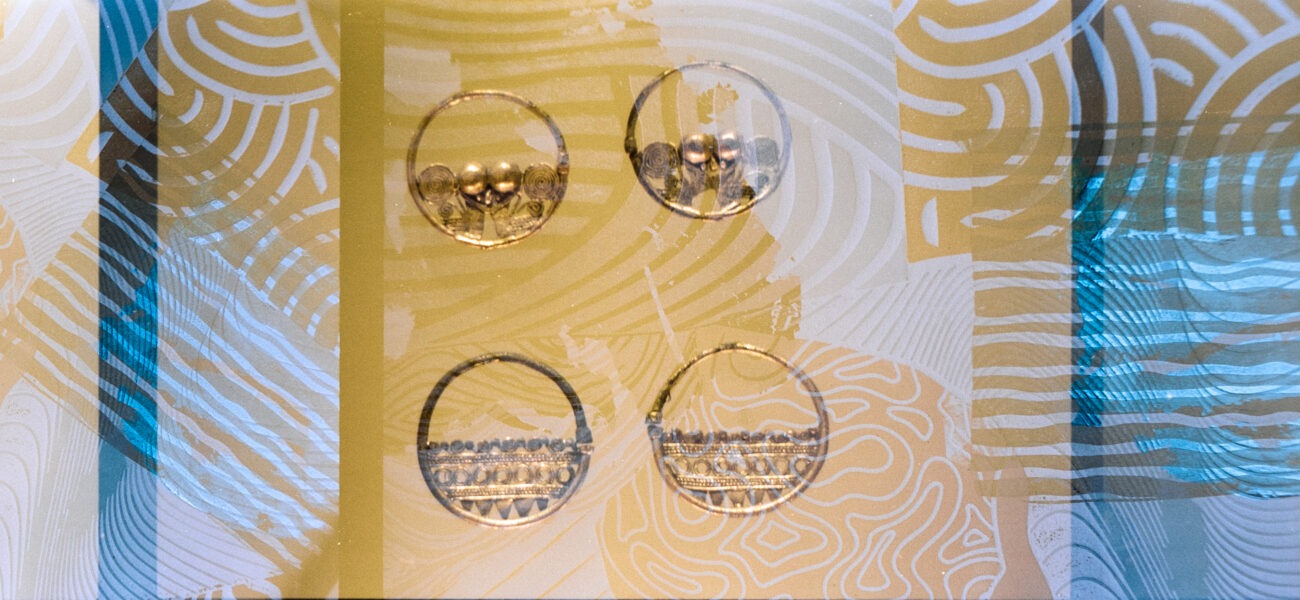
This is a series of double exposure analog photography. The project began in Bogota, Colombia, where we photographed prehispanic goldsmith pieces at the Gold Museum. Months later, we sent the film to Barcelona, Spain, where we inserted it in another camera to overlay the images of the prehispanic pieces with photographs of our artworks. This series highlights the goldsmith tradition that indigenous peoples perfected for thirty centuries until colonization destroyed the practice.
Abya Yala’s goldsmiths made these pieces as offerings to the land and imprints of their memory. Generations of people buried gold with the deceased in guacas (ancient burial sites) throughout the continent: from the Darién jungle to the Río de la Plata. Colonizers looted these sacred tombs to melt the pieces into gold ingots that they sent to Europe. The pieces that have been preserved ended up captive in private collections and museums. The unseen journey of the film rolls from Colombia to Spain evokes the path that the gold ripped away from the soil of Abya Yala travelled to enrich Europe. In these images, the ancient goldsmith pieces meet contemporary artworks and free themselves from the museum space in the abstractions of mountains and rivers depicted in our prints and paintings.
Between 2023 and 2025, the Kogui people of the Sierra Nevada de Santa Marta in Colombia achieved the return of five sacred goldsmith pieces that had remained in the Berlin Ethnological Museum for more than 100 years. For the peoples of the Sierra mountain range, these pieces are not mere objects, they are living beings that maintain the balance and connection between sacred spaces in their spiritual network. This is why they must return.
In the Colombian Andes, people say on certain nights "the guacas light up", the buried gold in these ancient burial sites shows itself because it is alive. In this series, the gold returns to the earth: to its temples that light up.